 Membership Portal

For many women, the most intimidating part of a first game day is not necessarily the shooting itself. It is usually the unknown.
Where do I go when I arrive? What happens at the meet? When do I load? Who tells me where to stand? What if I miss? What if I do something wrong? What happens between drives? Am I supposed to take birds home at the end?
The truth is, nobody is born knowing shoot-day etiquette. It is learned by being there, asking questions, watching others and slowly building confidence. Every experienced Gun, beater, picker-up or host had a first day once.
So, whether you are attending your first game day, joining as a guest, or simply trying to understand more about how a shoot day works, this guide walks through what actually happens from start to finish.
First Game Day? You Are Very Welcome
We love welcoming women onto their first game day. Everyone has to start somewhere, and we know how much confidence it can take to step into a new environment for the first time.
That said, a first game day should not be your first experience of shooting.
Before joining a game day, we ask that you have had some proper tuition, are confident handling a gun, and above all, are safe. You do not need to be an expert, but you do need to understand the basics, listen carefully, and be honest about your level of experience.
For anyone new to game shooting, we will usually arrange for you to stand with a more experienced Gun. Please do not see this as a negative. It is there to support you, help you understand the flow of the day, and make sure you feel comfortable and confident throughout.
If you are not already known to us, we may ask quite a few questions before confirming your place. Please do not be offended by this. It is simply so we can make sure the day is suitable, safe and enjoyable for everyone — including you.
Our aim is always to be welcoming, but safety comes first.
Before the Day
A good shoot day starts before you arrive.
You should usually receive the main details in advance, including the meeting place, arrival time, expected quarry, approximate bag, what to wear, whether food is provided, cartridge expectations, and any payment or tipping information.
If anything is unclear, it is always better to ask before the day. No host would rather you arrived confused, underprepared or anxious.
Useful things to check include where you are meeting, what time you need to arrive, whether breakfast or lunch is included, how many drives are planned, whether you need fibre-wad, steel, or lead cartridges, and whether there are any specific safety rules for the ground.
Upon booking you should know if you will be shooting alone, sharing a peg, or being accompanied by a more experienced Gun. If you are newer to game shooting, this can make a huge difference to how relaxed and supported you feel on the day.
Check the weather too. Shoot days can involve standing still for long periods, walking over uneven ground, mud, wind, rain and cold. Being comfortable makes a huge difference to your confidence and enjoyment.
What to Wear
You do not need to look like you have stepped out of a catalogue, but you do need to be warm, dry, safe and practical.
A typical game-shooting outfit might include boots, shooting socks, breeks or smart trousers, a shirt, jumper, coat, hat and gloves. Neutral countryside colours are usually preferred.
The most important thing is that you can move safely and comfortably. Your coat should allow you to mount the gun properly. Your boots should be suitable for mud, slopes and wet ground. Your hat should not fall over your eyes. Your gloves should allow you to handle the gun and cartridges safely.
Avoid bright colours, noisy fabrics, anything too restrictive, or footwear that looks lovely but cannot cope with a field in November.
For newer shots, comfort matters more than perfection. If you are warm, dry and able to move, you will have a much better day.
Arriving at the Meet
The day normally begins with everyone gathering at the agreed meeting point. This might be a shoot lodge, farmyard, pub, estate yard or purpose-built hut.
You will usually meet the host, keeper, other Guns and sometimes beaters or pickers-up. There may be tea, coffee, breakfast rolls or a full breakfast depending on the shoot.
This part of the day can feel quite intimidating if you are new, especially if everyone seems to know each other. In reality, most people are far more approachable than they first appear – especially as a Country Girl!
This is also the time to make sure you know where your gun, cartridges, slips and any personal kit are. If you are unsure where to put something, ask.
The Draw
Before the first drive, the Guns usually draw pegs. This means each Gun is allocated a peg number, which determines where they will stand on each drive.
The draw is often done by pulling numbered pegs, cards or counters from a bag, hat or box.
Your peg number will usually rotate throughout the day. For example, after each drive you might move up two or three places, depending on the shoot’s system. This is designed to make the day fair, as some pegs may see more birds than others.
If you are sharing a peg, you may be paired with another Gun and take it in turns to shoot, or one person may shoot the first part of the drive and the other the second. At CGUK events we often do four shots before swapping over. The host or keeper should explain this but it is absolutely paramount that you give your companion space to move and shoot and above all be safe!
If you are unsure how the rotation works, ask before you leave the meet. It is much easier to clarify at the beginning than to panic when everyone starts moving.
The Safety Briefing
Before shooting begins, there should always be a safety briefing. This is one of the most important parts of the day.
The host or keeper will usually explain the quarry, the expected format of the day, any specific hazards, where beaters and pickers-up will be, safe shooting angles, and any rules particular to that ground – most shoots do not allow shooting of any ground game ie Hares.
You may be told not to shoot below a certain height, not to shoot into certain areas, to watch for roads, footpaths, buildings, livestock, neighbouring Guns, beaters, stops or picker-ups.
Listen carefully, even if you have heard safety briefings before. Every shoot is different. The safe areas on one drive may not be safe on another.
If you do not understand something, ask. Safety is never the place to pretend.
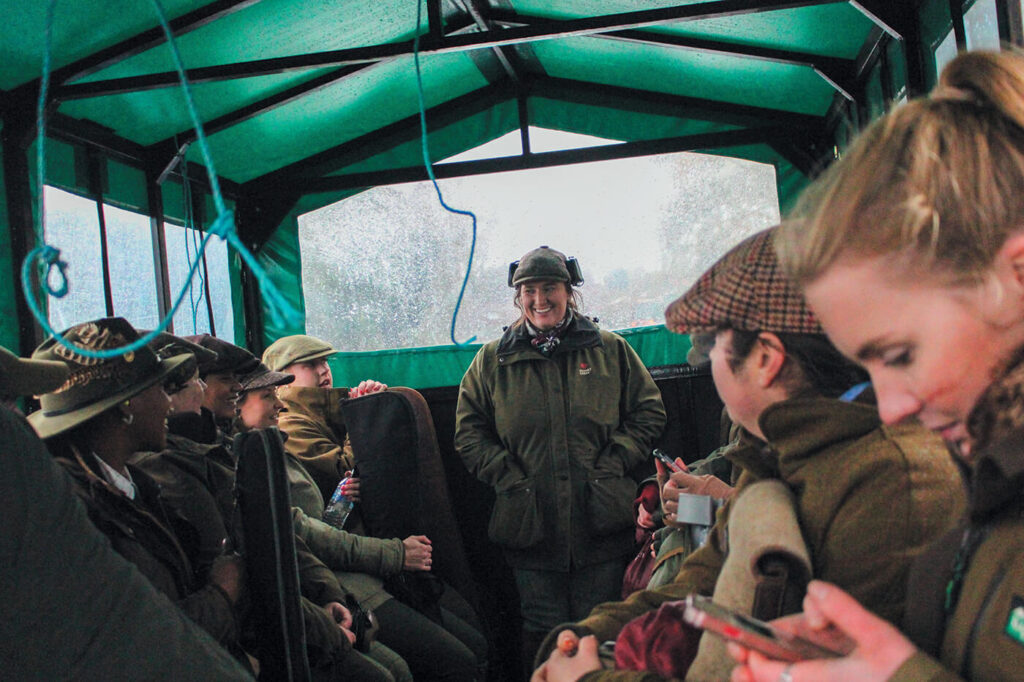
Travelling to the First Drive
After the briefing, everyone will travel to the first drive. This might be on foot, in your own vehicle, in a gun bus, trailer, buggy or shoot transport.
The keeper, host or shoot captain will usually direct everyone. You may be told to follow a particular vehicle, wait at a gate, or walk to your peg from a certain point.
When you arrive at the drive, you will be shown where to stand. Sometimes pegs are clearly marked with numbers. Sometimes someone will point you to a post, tree, flag or marker.
Do not wander away from your peg unless instructed. Your position has usually been chosen carefully for safety and the way the drive is expected to work.
On the Peg
Once you are on your peg, take a moment to look around.
Identify where the neighbouring Guns are. Look for beaters, picker-ups, dogs, roads, houses, footpaths, livestock, vehicles, woods and hedges. Think about your safe zones before the drive starts.
You should know where you can shoot and where you must not shoot.
This is also a good time to check your footing. Make sure you are standing somewhere stable. Move any loose branches or obvious trip hazards if needed. If the ground is slippy, adjust your stance.
Your gun should stay broken and unloaded until it is safe and appropriate to load.
On some shoots, the start of the drive may be marked by a horn, whistle, radio call, or the keeper telling you. On others, the birds beginning to move makes it obvious. If you are unsure, wait and watch your neighbours.
It is always better to be slightly cautious than too quick.
Loading
Only load when you are on your peg, facing a safe direction, and the drive is about to begin.
For a side-by-side or over-and-under shotgun, this usually means placing two cartridges into the open barrels and closing the gun when you are ready. Keep the barrels pointing in a safe direction at all times.
Do not load while walking between pegs. Do not close the gun casually while chatting. Do not turn around with a closed gun.
Your gun should be treated with respect at all times, whether loaded or unloaded.
If you are sharing a peg, make sure you and the other Gun are clear about who is shooting and when. Communication matters.

During the Drive
Once the drive begins, birds may come from different directions depending on the ground. Some may be high, some low, some fast, some curling, some behind, some straight over you.
You are not expected to shoot everything.
In fact, one of the most important lessons in game shooting is knowing when not to shoot.
You should let a bird go if it is too low, unsafe, out of range, too close to another Gun, heading towards beaters or picker-ups, or if you are simply not comfortable taking the shot.
There is no shame in leaving a bird. Good judgement is far more important than firing at everything.
If you miss, you miss. Everyone misses. Even very experienced Guns miss. Do not let one missed bird ruin your drive. Reset, stay safe and focus on the next opportunity.
Try not to rush. It can feel as though everything happens at once, but good shooting is controlled, calm and considered.
What If You Hit a Bird?
If you shoot a bird cleanly, mark where it falls as best you can. This helps the picker-ups and dogs retrieve it efficiently.
You do not usually leave your peg during the drive to collect birds unless specifically told to do so. On many driven days, picker-ups and dogs will retrieve shot game after the drive or from behind the line where appropriate.
If you think you have pricked or wounded a bird, mark it carefully and tell the picker-up, host or keeper as soon as you can. The priority is always to ensure any wounded bird is found quickly.
Again, there is no shame in saying something. The responsible thing is to speak up.
The End of the Drive
The end of the drive may be signalled by a horn, whistle, shout, or someone telling you the drive is over.
When the drive ends, unload immediately. Open your gun, remove the cartridges and keep the gun broken.
Check the ground around you for empty cartridges and pick them up. Leaving cartridges behind is poor form and not good for the countryside.
Wait for instructions before moving off. Depending on the shoot, you may need to remain still while dogs work, birds are picked, beaters come through, or vehicles move.
When it is time to leave, make sure your gun is broken and safe.
Between Drives
Between drives, the Guns will move to the next location. This is often when people chat, compare notes and ask how everyone got on.
If you are new, this is a lovely opportunity to learn. You might ask your neighbour how they judged a particular bird, why they let one go, or where they were watching during the drive.
Most people are happy to share tips, especially if you are polite and genuinely interested.
This is also the time to reload your cartridge bag, have a drink of water, adjust clothing, change gloves, or take a moment if you feel overwhelmed.
A shoot day can be mentally tiring when you are new. You are taking in safety, etiquette, shooting, people, dogs, vehicles, weather and new surroundings all at once. It is completely normal to feel a little drained.
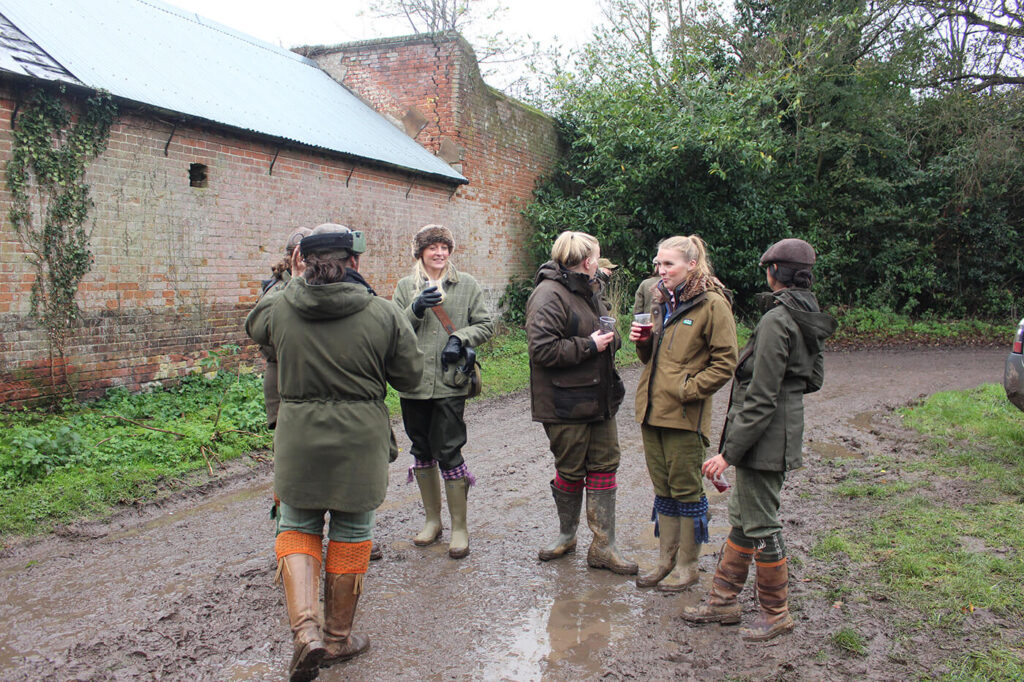
Elevenses
Many shoot days include elevenses after one or two drives. This might be anything from sausage rolls and cake from the back of a vehicle to a full spread in a hut, barn or lodge.
Elevenses is a big part of the social side of shooting. It gives everyone a chance to pause, warm up, talk, and enjoy the day beyond the shooting itself.
On some shoots, drinks may be offered. If you are shooting, be sensible. Alcohol and guns require responsible judgement, and many Guns choose not to drink until the shooting has finished.
This is also a good moment to speak to the host if you are unsure about anything, or to thank people who are helping you.
Lunch
Some days include lunch, either in the middle of the day or at the end. Others may only include elevenses, especially on smaller or more informal days.
Lunch might be a formal seated meal, a pub lunch, soup and sandwiches, or food served back at the shoot lodge.
If you are a guest, follow the lead of the host. If you are unsure where to sit, where to put your gun, or what the plan is after lunch, just ask.
The social side can feel daunting, but it is also one of the best parts of a shoot day. It is where friendships are made, stories are shared and newer Guns start to feel part of the community.
The Role of the Keeper
The keeper is central to the day.
They are responsible for managing the birds, the ground, the drives, the safety of the day, and often much of the year-round work that makes the shoot possible.
A good shoot day is the result of months of preparation. Habitat management, feeding, dogging-in, pen work, planning drives, maintaining tracks, organising beaters, managing dogs, liaising with landowners and keeping everything running safely all sit behind the few hours you see on the day.
Understanding this helps you appreciate that game shooting is not just about standing on a peg. It is part of a much wider rural picture.
The Beaters
Beaters are the people who move through woodland, cover crops, hedgerows or other areas to flush birds towards the line of Guns.
Their work can be physically demanding, especially in bad weather or difficult terrain. They may be walking through brambles, mud, steep banks or thick cover.
They are a vital part of the day, and they should always be treated with respect.
As a Gun, you must be constantly aware that beaters may be in front, behind or to the side depending on the drive. This is why safe angles and listening to the briefing are so important.
A thank you to the beating team at the end of the day is always appreciated.
The Pickers-Up
Pickers-up and their dogs retrieve shot game. They may stand behind the line, to the sides, or in positions where they can mark birds falling and send dogs safely.
A skilled picker-up is invaluable. Their dogs help ensure game is collected efficiently and wounded birds are found quickly.
Do not distract dogs while they are working. Do not assume you should pick birds yourself unless that is the custom on the shoot or you have been asked. If you know a bird has fallen in a difficult spot, mark it and let the picker-up know.
Watching good dogs work is one of the great pleasures of a shoot day.
The Bag
At the end of the day, the bag is usually counted. This means the number of birds shot during the day is recorded.
On some shoots, the birds may be laid out respectfully for the Guns, beaters and pickers-up to see. On others, the game may be counted more informally.
The bag is not just about numbers. It reflects the day, the work of the keeper, the conditions, the shooting, the birds and the team effort behind it all.
It is also an opportunity to thank the keeper, host, beaters, pickers-up and everyone involved.
Tipping
Tipping is a traditional part of many game shoot days, especially for the keeper and sometimes the beating or picking-up team depending on the shoot.
The amount varies depending on the type of day, the size of the bag, the area and the shoot’s customs. Sometimes the host will advise in advance. Sometimes there may be a suggested amount.
If you are unsure, ask the person who invited you, the host or another experienced Gun. It is better to ask quietly than to be unsure.
Tipping is a way of acknowledging the work that has gone into the day, much of which happens long before the Guns arrive.
Taking Game Home
You may be offered birds to take home at the end of the day. This is something to be welcomed if you are able to use them.
Game is a wonderful, sustainable source of meat, and taking birds home helps connect the day to the table.
If you are not confident preparing game, ask for advice. Many people are happy to share simple recipes or preparation tips. You do not have to start with anything complicated. Pheasant breasts, slow-cooked casseroles, curries, pies and simple pan-fried dishes are all good starting points.
If you cannot take game home, be honest and polite. But if you can, it is a lovely way to respect the bird and the day.
What If You Are Nervous?
Nerves are completely normal.
You might be nervous about shooting in front of others, handling the gun safely, getting etiquette wrong, not knowing anyone, missing birds, or simply feeling out of place.
The best thing you can do is tell someone. A good host would much rather know you are new or nervous so they can support you properly.
You can also ask to stand with someone experienced, share a peg, or have someone guide you through the day. There is no weakness in that. It is one of the best ways to learn.
Confidence comes from experience, not from pretending.
What If You Miss?
You will miss.
Everyone misses.
Missing is part of shooting, and it does not mean you do not belong there. Some birds are difficult. Some days are windy. Sometimes your timing is off. Sometimes nerves get the better of you.
The important thing is to stay safe, keep your composure and enjoy the day.
A missed bird is soon forgotten. Unsafe behaviour is not.
What If You Do Not Know the Etiquette?
Ask.
That really is the answer.
Shooting can sometimes feel wrapped in tradition, but most etiquette is rooted in safety, respect and consideration for others.
Thank the host. Listen to the keeper. Respect the beaters and pickers-up. Be safe with your gun. Do not shoot low birds. Pick up your cartridges. Be polite. Do not boast. Do not criticise the day. Be grateful for the work that has gone into it.
You do not need to know everything. You just need to be willing to learn.
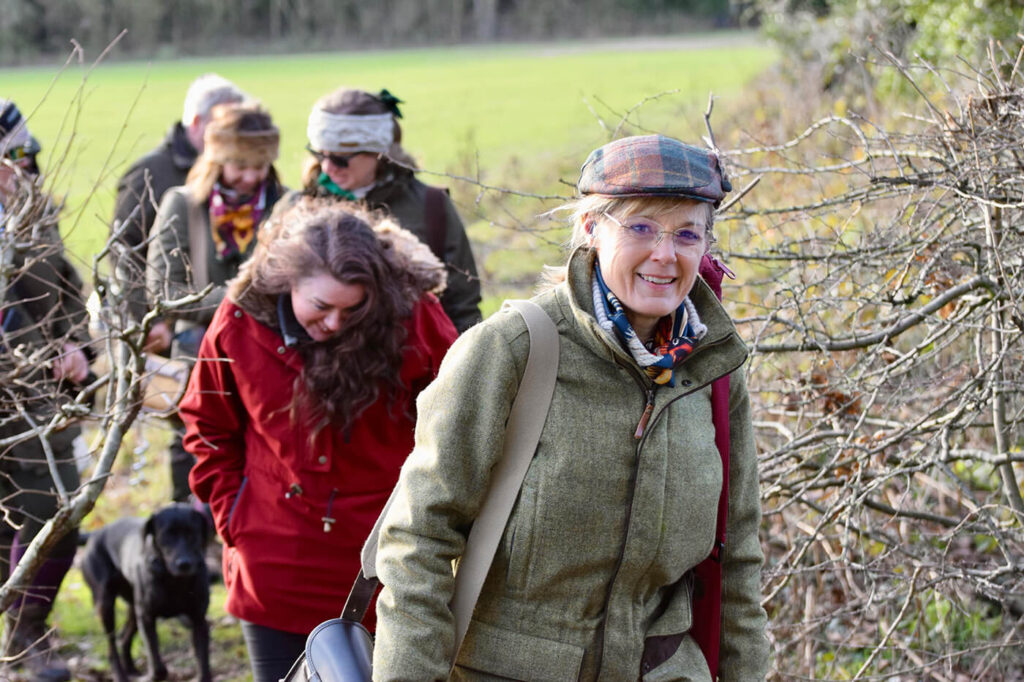
The End of the Day
At the end of the day, Guns will usually return to the meeting point, shoot room, pub or lodge. There may be tea, drinks, food, the laying out of the bag, or simply a final thank you.
Make sure you thank the host, keeper and anyone who has helped you. If you were invited as a guest, thank the person who invited you too.
Check you have all your kit: gun, slip, cartridges, coat, hat, gloves, dog if you brought one, and anything you placed in a vehicle earlier in the day.
If you enjoyed the day, say so. If you learned something, say that too.
More Than Just Standing on a Peg
A shoot day is not just about the shooting.
It is about the countryside, the seasons, the people, the dogs, the birds, the food, the work behind the scenes, the conversations, the traditions and the responsibility that comes with taking part.
For women entering the shooting field, understanding what happens on a shoot day can make the difference between feeling like an outsider and feeling able to take your place with confidence.
You do not have to know everything before you begin.
You just have to begin safely, honestly and with a willingness to learn.
