 Membership Portal

The main elements of gun fit – PART 2
To be read in conjunction with Part 1
Are you Fit for Gun Fit?
For successful shooting, you need your gun to fit you, not you to fit your gun! You need confidence that when you place your hand on the grip it will be in the correct position and the gun is easy to lift; the stock should fit neatly in your cheek with your eye looking down the rib without any contortions by you. The gun should be comfortable on shooting and not give you any pain. An ill-fitting gun can cause bruising, headaches or strains, which isn’t fun!
As explained in Part 1, before starting your “gun fit journey”, understand the fundamentals; your eye dominance; how to stand correctly; how to hold and mount the gun; having a gun appropriate to you and the kind of shooting you want to do. I refer you to previous blogs.
Budget for alterations; £100 should get the stock shortened and an adjustable comb will cost about £250. Other adjustments could be a few hundred pounds. Buying a ladies’ gun is the best starting point, depending on the individual, but alterations may still be needed.
Below are the main elements of gun fit; be aware that altering one thing can affect another. I recommend temporary adjustments first, if possible, to ensure you are on the right track.
1. The Grip
The grip is the first point of contact when you pick up your gun. Having a well-fitted grip gives stability and control when handling the gun. The circumference of the “neck” of the gun should be slim enough for your thumb and middle finger to overlap slightly at the point they meet. With a modern over and under, the correct radius of the pistol grip allows the hand to sit comfortably and the trigger to be pulled with the pad of the index finger and not the joint or the tip of the finger. It puts the wrist in a position, so it can easily articulate allowing the gun to be mounted without strain. When the grip of the gun is too large, the tendency is to place the hand further forwards to reach the trigger, putting stress on the wrist leading to an inconsistent hand position, instability and awkward gun mounting. Adjustable triggers can help but ideally the grip needs to reflect the hand size.
Palm swells are a personal choice and slightly overrated in my view. They feel nice but you don’t want the grip to be too much of a handful, compromising stability and control.
2. Length of Pull (Distance from the middle of the butt pad to the trigger)
The correct length of pull allows a smooth gun mount and smooth triggering. If the mount feels awkward, over stretched, and the stock catches on the way up, it’s too long. If you need to pull the gun back into the shoulder, and your arms cramped up and your nose ends up too close to your thumb, the stock is too short.
With a long stock, try a thinner butt pad or even experiment without the pad, but protect your shoulder when shooting. If it’s still too long you will need to lop a chunk off the end. If the stock is too short, try a thicker butt pad or build up the length with cardboard or washers. When you’re happy with the new length, then make a permanent alteration.

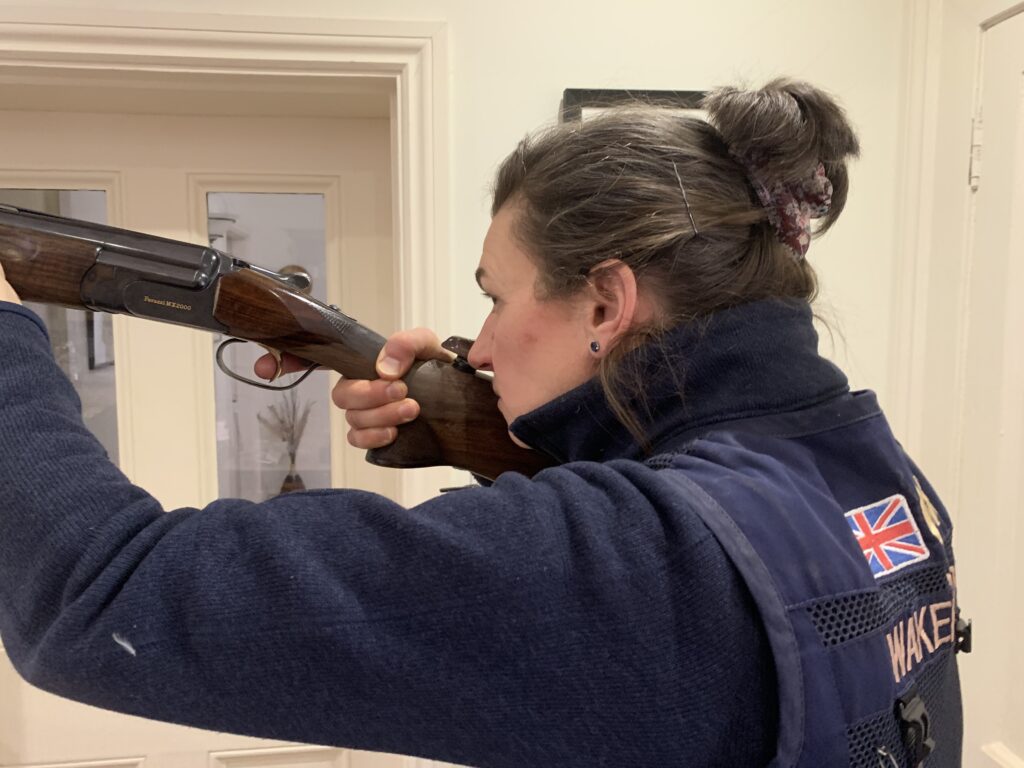
3. Height and Angle of Comb (Drop at Comb)
The height of the comb determines where the eye lies in relation to the rib. When the gun is correctly mounted the pupil should be “sitting” on top of the rib; my preference is for the iris to be visible too. If any flesh can be seen between the iris and the rib, the comb is too high, and targets will be missed over the top. As the distance between the centre of the eye socket and the cheek bone is less for women than men, it is the case that most women can only see the back of the action on a man’s gun and have no chance of seeing the target without lifting their head off the stock; hence most ladies will need a higher comb.
You can temporarily raise the comb of a fixed stock with a comb raiser or foam strips for the purposes of establishing the correct height. Adjustable combs give flexibility and allow quick alterations to the comb height; they can usually be fitted after sale unless you have a very short stock. Other solutions include bending the stock through a heating process or by a stocker splicing a piece wood into the comb to raise the height. Comb height reduction is a matter of filing down the comb.
The configuration of shoulders, neck and cheekbones determine the required “drop at comb”; I recommend professional input to get this right unless you are very experienced.
4. Monte Carlo Stock
Due to longer necks, a Monte Carlo style stock is a good option for women. It allows the butt pad to be in full contact with the shoulder, while a “step up” at the heel lifts the height of the stock so the head sits in a more natural position rather than being scrunched down to the stock. You can experiment with this configuration by taping the butt pad on to the gun at a lower level, protruding below the toe. If it feels more comfortable talk to your stocker. It’s a slightly more complicated alteration but it can be done.
5. Cast – Bend of the stock to the side
“Cast off’ for a right hander or “cast on” for a lefty allows the stock to sit in the shoulder and bring the eye in line with the rib. Most stocks have some cast, but depending on your build, how you stand, mount the gun and your chest, you may need a different amount of cast. You can experiment with altering the cast by placing a thin piece of cardboard between the stock and the action. The gun can then be bent to permanently change the cast.

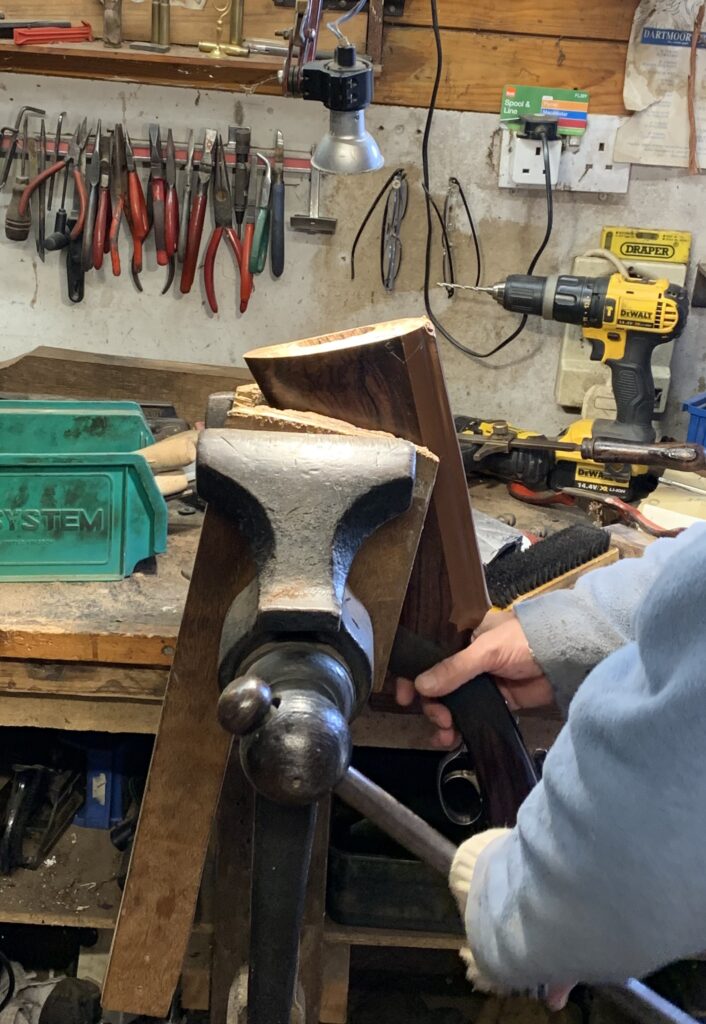
6. Pitch – The angle of the butt in relation to the rib of the gun
When the gun is mounted there should be full contact between the butt plate and the body. If this is not the case, then the pitch may need altering. Feeling recoil channelled to one spot eg heel or toe is a tell-tale sign. Experiment by inserting packing between the stock and the butt plate either at the heel or the toe according to where the gap is. A permanent alteration is a fairly simple process by the stocker. Beware of butt plates that have a sharp toe on them, which can be particularly uncomfortable to women and are best avoided!
7. Other Considerations
Other aspects to consider are the width of the comb which may need alteration according to your facial features. Also, the width of the butt pad and stock may need slimming down again according to your shoulder and sometimes facial features. I like a slim stock with a flat face to accommodate my square jaw. Take advice on these specific areas.
8. Length of Barrels
Whilst not exactly gun fit, barrel length is a matter of appropriateness and preference for you and your shooting. Many ladies shoot with 28” or 30” barrels and more experienced game or sporting shots may prefer 32”. But don’t burden yourself with longer barrels than you’re comfortable with if you are happier and shoot better with shorter barrels. I have a friend who shoots game with 26” Miroku and she can hit some decent birds!
Make sure you gun is balanced too. If the stock or barrels are significantly heavier you may wish to add some weight to the opposite end. Experiment with what feels best for you.
9. Partially Adjustable and Fully Adjustable Stocks
Some guns now come with different thickness butt pads, an adjustable comb, an adjustable trigger and weights, all of which are very helpful in setting your gun up to fit without having to venture to the gun smiths. But they may not have all the answers.
Moving into the world of fully adjustable stocks, the two biggest players in the market are TSK and Ergosign. They are technically clever and well-made but can encourage tinkering with the fit if you have a bad day! They are expensive, £2,000 plus, and from my experience they have some limitations; the grips don’t always fit well and recoil through a metal tube can be problematic to some. They are popular with the Olympic trap and skeet shooters.
10. Bespoke Stock
The ultimate gun fit solution is to have a bespoke stock made which is specialist and expensive. I would only recommend this for more experienced shooters who are consistent in their gun mount and shooting style and have a good idea what they require.
Summary Advice
Take advice from a coach with gun fit knowledge. Make temporary alterations to your stock first, shoot with it for some time, and find a stocker you have confidence in to make the permanent changes.
HAPPY SHOOTING EVERYONE!!
Written By Nicki Wakeford
Freelance Shooting Coach, British Shooting Talent Pathway Coach
APSI Member, ISSF C Licence Coach, CPSA Safety Officer, Lantra Loader

